LATEST UPDATES

News

Skills in demand

From our Blog

Tuesday, November 19, 2013

Australia relaxes student visa restrictions


Australia relaxes student visa restrictions
Students from Sri Lanka, India and Pakistan are no-longer categorized within the assessment level associated with high-risk visa applicants (Assessment Levels 4 and 5), which are scheduled to be abolished by January 2014 by the Australian Government.
Applicants from Sri Lanka will be categorized in Assessment Level 3. According to Barrister and Solicitor, Fairfields Lawyers Australia, Don Susantha Katugampala, this was disclosed by the Federal Education Minister Christopher Pine in his keynote address at the Australian Economic Education Conference recently. He firmly endorsed the Federal Government's commitment to reduce barriers to trade, enhance bi-lateral relations across the Asia-Pacific Region and develop comprehensive strategies to realize Australia's economic potential.
Following this address, broad reforms are in the process of being implemented, with the focus on enhancing opportunities for international students within Australia's higher education sector.
The Federal Immigration Minister Scott Morrison MP has further announced revolutionary changes to student visa rules complement these measures.
"This signals the end of indefinite delays in visa processing and the removal of restrictive financial conditions which previously discouraged many potential students from exploring higher education options in Australia," Katugampala said.
"Overall, the message is abundantly clear. This Government waste no time in taking action, and Australia is opening its doors for business. The proposed changes alone are expected to restore Australia's international student revenues to their pre-2011 peak of $ 19 billion, and offers a wide range of disciplines for international students who need only demonstrate access to sufficient funds covering 12 months of their combined expenses in Australia."
- See more at: http://www.dailynews.lk/business/australia-relaxes-student-visa-restrictions#sthash.wrlTDJdb.dpuf

Monday, November 18, 2013

Part time jobs for students


We simply get students jobs.


Call us Cupid, but our core service is match-making. We align the needs of employers looking for their ideal employee/s with the needs of tertiary students looking for work. SJS does this better than anyone else because we specifically serve students!
Our vision is to enable every student that wants employment to secure employment!

Our purpose is to connect students and employers in mutually beneficial ways.

Did you know... 9 out of 10 students and employers that have used Student Job Search would recommend us!

New Zealand Visa Application Centre – Sri Lanka


3rd Floor, No 28,
Abdeen Jewelers Building
Temple lane, Off Duplication Road 
Colombo 03
Sri Lanka
Website - https://www.ttsnzvisa.com/lk-en/Home
EMail:ttslankanz@ttsvisas.com
Phone:+94112506257/258,+94114334976/401


Thursday, September 12, 2013

Cost Of Living New Zealand

Cost Of Living in New Zealand

Link to original post

the cost of living varies depending on where you live in New Zealand. Auckland (- New Zealand’s largest city -) is the most expensive place to live, particularly for housing but this can be offset by the higher salaries often on offer there. The further south you choose to live, the less expensive the cost of living becomes.

Whilst you are looking for longer-term accommodation you may find staying in a hostel or independent backpackers for travelers the cheapest option; visit www.backpack.co.nz or www.yha.co.nz.
New Zealand offers a mixture of the usual ways for finding accommodation. Either purchase a copy of Saturday’s local newspaper (such as The Herald, the Dominion Post or The Press), use local real estate agencies or visit the following websites:
To find out your rights and obligations as a tenant, visit the Housing New Zealand website . Generally your first payment to a landlord will include 2 – 4 weeks rent in advance, as well as a bond equivalent to the same.
When looking for a room or property to rent, consider the following:
  • If the room/property is fully, part or not furnished.
  • Which bills are included in the cost of the rent.
  • What the landlord’s expectations are at the end of the tenancy.
  • Where the bond will be held for safe-keeping.

Table of other costs

Expense Cost (NZD $)
Monthly Rent (two bed flat) 1,500
Monthly Rent for room 700
Food per week (for two) 130
Coffee 3.50
Cinema ticket 15.00
Litre of Petrol 1.80
Bottle of Beer (at pub) 6.00
Glass of Wine (at pub) 6.00
Night out for two 60.00
Litre of Milk 2.50
Loaf of Bread 1.00


Sunday, September 08, 2013

Mobile Network operators in New Zealand

Sunday, August 18, 2013

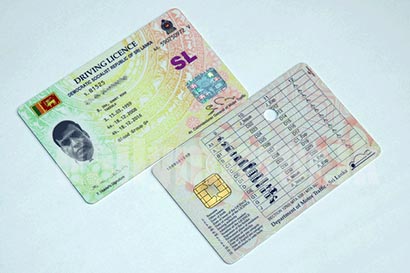
How To Convert An Overseas Driving License


http://www.nzta.govt.nz/licence/index.html

Although you are permitted to drive in New Zealand if you hold a valid driver’s license from another country, you will need to convert this license to a New Zealand one if you are staying here for 12 months or more. Here’s how you do it.


Where to go

You will need to apply in person at a New Zealand Transport driver licensing agent to get your current license converted. These agents are selected VTNZ and VINZ stations and most AA offices. Look these up online to see where your nearest or most convenient agent is.
When you get to your nearest or most convenient agent, find the relevant application for that you will need to complete.


What You’ll Need

You will need to present your current overseas driving license in order for you to be issued with a valid New Zealand license. You will also need to bring along another form of ID, a passport is preferable, and evidence of address. The evidence of address can be in the form of a bank statement or a utility bill, both no more than 12 months old.
You may also have to present a current medical certificate if required and pass an eyesight screening check.

Cost

Once you have filled out the relevant forms you need to pay a fee to get your new license. This varies between $70 and $120 depending on what license you need to get (learner, restricted or full).
After all the forms have been checked and your fee paid, you will then get your photograph taken and your new license will be sent to you by post.

Thursday, June 27, 2013

Annual Update of Skilled Occupation List - 1 July 2013

Annual Update of Skilled Occupation List - 1 July 2013

The Skilled Occupation List

The Skilled Occupation List (SOL) will change from 1 July 2013, with five occupations to be removed. The SOL determines which occupations are eligible for independent and family sponsored skilled migration.
The updated SOL is based on expert advice from the Australian Workforce Productivity Agency (previously known as Skills Australia). The list of occupations reflects the Australian Government's commitment to a skilled migration program that delivers skills in need in Australia. The SOL will continue to deliver a skilled migration program focused on high value skills that will help to address Australia's future skill needs.


Summary of changes to the SOL
The following changes have been applied to the SOL.
Occupations removed from the SOL
ANZSCO Code Occupation
251511 Hospital Pharmacist
251513 Retail Pharmacist
323111 Aircraft Maintenance Engineer (Avionics)
323112 Aircraft Maintenance Engineer (Mechanical)
323113 Aircraft Maintenance Engineer (Structures)
Occupations on the SOL from 1 July 2013
ANZSCO Code Occupation
133111 Construction Project Manager
133112 Project Builder
133211 Engineering Manager
133513 Production Manager (Mining)
134111 Child Care Centre Manager
134211 Medical Administrator
134212 Nursing Clinical Director
134213 Primary Health Organisation Manager
134214 Welfare Centre Manager
221111 Accountant (General)
221112 Management Accountant
221113 Taxation Accountant
221213 External Auditor
221214 Internal Auditor
224111 Actuary
224511 Land Economist
224512 Valuer
231212 Ship's Engineer
231213 Ship's Master
231214 Ship's Officer
232111 Architect
232112 Landscape Architect
232213 Cartographer
232214 Other Spatial Scientist
232212 Surveyor
232611 Urban and Regional Planner
233111 Chemical Engineer
233112 Materials Engineer
233211 Civil Engineer
233212 Geotechnical Engineer
233213 Quantity Surveyor
233214 Structural Engineer
233215 Transport Engineer
233311 Electrical Engineer
233411 Electronics Engineer
233511 Industrial Engineer
233512 Mechanical Engineer
233513 Production or Plant Engineer
233611 Mining Engineer (Excluding Petroleum)
233612 Petroleum Engineer
233911 Aeronautical Engineer
233912 Agricultural Engineer
233913 Biomedical Engineer
233914 Engineering Technologist
233915 Environmental Engineer
233916 Naval Architect
234111 Agricultural Consultant
234112 Agricultural Scientist
234113 Forester
234611 Medical Laboratory Scientist
234711 Veterinarian
234912 Metallurgist
234914 Physicist (Medical Physicist only)
241111 Early Childhood (Pre-Primary School) Teacher
241411 Secondary School Teacher
241511 Special Needs Teacher
241512 Teacher of the Hearing Impaired
241513 Teacher of the Sight Impaired
241599 Special Education Teachers nec
251211 Medical Diagnostic Radiographer
251212 Medical Radiation Therapist
251213 Nuclear Medicine Technologist
251214 Sonographer
251311 Environmental Health Officer
251312 Occupational Health and Safety Advisor
251411 Optometrist
252111 Chiropractor
252112 Osteopath
252311 Dental Specialist
252312 Dentist
252411 Occupational Therapist
252511 Physiotherapist
252611 Podiatrist
252712 Speech Pathologist
253111 General Medical Practitioner
253211 Anaesthetist
253311 Specialist Physician (General Medicine)
253312 Cardiologist
253313 Clinical Haematologist
253314 Medical Oncologist
253315 Endocrinologist
253316 Gastroenterologist
253317 Intensive Care Specialist
253318 Neurologist
253321 Paediatrician
253322 Renal Medicine Specialist
253323 Rheumatologist
253324 Thoracic Medicine Specialist
253399 Specialist Physicians nec
253411 Psychiatrist
253511 Surgeon (General)
253512 Cardiothoracic Surgeon
253513 Neurosurgeon
253514 Orthopaedic Surgeon
253515 Otorhinolaryngologist
253516 Paediatric Surgeon
253517 Plastic and Reconstructive Surgeon
253518 Urologist
253521 Vascular Surgeon
253911 Dermatologist
253912 Emergency Medicine Specialist
253913 Obstetrician and Gynaecologist
253914 Ophthalmologist
253915 Pathologist
253917 Diagnostic and Interventional Radiologist
253918 Radiation Oncologist
253999 Medical Practitioners nec
254111 Midwife
254411 Nurse Practitioner
254412 Registered Nurse (Aged Care)
254413 Registered Nurse (Child and Family Health)
254414 Registered Nurse (Community Health)
254415 Registered Nurse (Critical Care and Emergency)
254416 Registered Nurse (Development Disability)
254417 Registered Nurse (Disability and Rehabilitation)
254418 Registered Nurse (Medical)
254421 Registered Nurse (Medical Practice)
254422 Registered Nurse (Mental Health)
254423 Registered Nurse (Perioperative)
254424 Registered Nurse (Surgical)
254499 Registered Nurse nec
261111 ICT business Analyst
261112 Systems Analyst
261311 Analyst Programmer
261312 Developer Programmer
261313 Software Engineer
263111 Computer Network and Systems Engineer
263311 Telecommunications Engineer
263312 Telecommunications Network Engineer
271111 Barrister
271311 Solicitor
272311 Clinical Psychologist
272312 Educational Psychologist
272313 Organisational Psychologist
272314 Psychotherapist
272399 Psychologists nec
272511 Social Worker
312211 Civil Engineering Draftsperson
312212 Civil Engineering Technician
312311 Electrical Engineering Draftsperson
312312 Electrical Engineering Technician
313211 Radio Communications Technician
313212 Telecommunications Field Engineer
313213 Telecommunications Network Planner
313214 Telecommunications Technical Officer or Technologist
321111 Automotive Electrician
321211 Motor Mechanic (General)
321212 Diesel Motor Mechanic
321213 Motorcycle Mechanic
321214 Small Engine Mechanic
322211 Sheetmetal Trades Worker
322311 Metal Fabricator
322312 Pressure Welder
322313 Welder (First Class)
323211 Fitter (General)
323212 Fitter and Turner
323213 Fitter-Welder
323214 Metal Machinist (First Class)
323313 Locksmith
331112 Stonemason
331211 Carpenter and Joiner
331212 Carpenter
331213 Joiner
332211 Painting trades workers
333111 Glazier
333211 Fibrous Plasterer
333212 Solid Plasterer
334111 Plumber (General)
334112 Airconditioning and Mechanical Services Plumber
334113 Drainer
334114 Gasfitter
334115 Roof plumber
341111 Electrician (General)
341112 Electrician (Special Class)
341113 Lift Mechanic
342111 Airconditioning and Refrigeration Mechanic
342211 Electrical Linesworker
342212 Technical Cable Jointer
342313 Electronic Equipment Trades Worker
342314 Electronic Instrument Trades Worker (General)
342315 Electronic Instrument Trades Worker (Special Class)
399111 Boat Builder and Repairer
399112 Shipwright
411211 Dental Hygienist
411212 Dental Prosthetist
411213 Dental Technician
411214 Dental Therapist

Saturday, June 15, 2013

Australia to tighten skilled immigration rules from July 1

Australia to tighten skilled immigration rules from July 1

A number of changes will be made to 457 visa programme to prevent abuse

A number of changes will be implemented to the 457 visa programme beginning July 1.


According to the Department of Immigration and Citizenship (DIC), the primary aim of the changes is to safeguard the integrity of the program.

The 457 visa program was developed with the purpose to enable employers to fill skills shortages by recruiting qualified overseas workers where appropriately skilled Australians are unavailable.

It is a temporary visa, lending a quick-fix solution to labour shortages. However, over the years, the program has been prone to misuse by employers as well as foreign employees.

As a result, the position of the local employee has been undercut, and the conditions of overseas employees have been neglected in certain cases.

“The 457 program has expanded well above the national employment growth rate, and while most employers are using the subclass 457 appropriately, the nature of the program’s use by some employers indicates that the objectives of the program are not being fully met,” the DIC explained on its website.

“Within the program, significant growth in applications was recorded in 2011-12 from working holiday maker and student visa holders. Many of these subclass 457 visa applicants were nominated to work in occupations and regions which are not experiencing widespread skills shortages, and in some industries, they accounted for over half of total grants. This trend suggests that usage of the program is being increasingly driven by temporary visa holders seeking to remain in Australia instead of the demands of the Australian labour force.”

With the changes to the program, the DIC hopes to increase its capacity to respond to the integrity concerns by strengthening current legislation. The following changes will be introduced by the beginning of next month:

- The position must be a genuine vacancy within the business. When there are concerns the position may have been created specifically to secure a 457 visa without consideration of whether there is an appropriately skilled Australian available, investigation may be carried out;

- DIC may take action against sponsors who engage in discriminatory recruitment practices;

- The market salary exemption threshold will be increased from $80,000 to $50,000 to ensure that higher paid salary workers are not able to be undercut through the employment of overseas labour at a cheaper rate;

- The English language exemptions for certain positions will be removed. In this way 457 visa who have an ongoing position with their employer and want to apply for permanent residence in the long-run will not disadvantaged because of their language ability;

- Applicants who are nominated with a salary greater than $92,000 will continue to be exempted from the English language requirement;

- The requirement for sponsors to train Australians will be strengthened with some amendments, introducing an ongoing and binding requirement to meet training thresholds for the duration of their approved sponsorship;

- Workers with a 457 visa must be engaged with the company through an employment contract, as opposed to a business contract for services;

- Sponsors will solely be responsible for recovery costs.

“The changes will not adversely affect the vast majority of employers who are using the program appropriately. The changes will, however, strengthen the government’s capacity to identify and prevent employer practices that are not in keeping with the purpose of the 457 program,” stated the DIC.

Likewise, existing 457 visa holders will not be affected by the rule, because presumed is that they are already doing the right thing. Potential applicants for the 457 visa program will have to take notice of the rules because they might be required to provide with additional evidence to prove their integrity, the DIC concluded.

Saturday, May 11, 2013

Sri Lankan community celebrates New Year


Changes to the Temporary Graduate Visa (subclass 485) from 23 March 2013

Changes to the Temporary Graduate Visa (subclass 485) from 23 March 2013

From 23 March 2013, in response to recommendations four and eight of the Strategic Review of the Student Visa Program 2011 (the Knight Review), new post-study work arrangements will be introduced for graduates of an Australian Bachelor Degree, Masters Degree or Doctorate. The post-study work arrangements are being introduced as a new stream of the existing Temporary Skilled Graduate (subclass 485), which will be renamed the Temporary Graduate Visa (subclass 485).
See: Temporary Graduate Visa (Subclass 485)

Australia and NZ Jointly Manage Overseas Immigration Physicians

Australia and NZ Jointly Manage Overseas Immigration Physicians

Tuesday, April 23, 2013
According to a recent announcement, New Zealand and Australia agreed to jointly manage an offshore network of panel physicians to improve the quality of health examinations visa applicants receive.
Panel physicians consist of doctors and radiologists who undertake immigration health examinations for visa applicants.
Australia and New Zealand signed a memorandum of understanding (MOU) which creates a jointly managed network co-ordinated by Immigration New Zealand (INZ) and the Department of Immigration and Citizenship (DIAC). The MOU is considered to bring several benefits to both countries, according to the Head of INZ, Nigel Bickle, and his Australian counterpart, the Secretary of DIAC, Martin Bowles.
The benefits of alignment include:
  • improved customer service
  • targeted communication, administration, performance management and training for a single panel physician network, and related cost savings
  • enhanced integrity through robust auditing and analysis
  • expansion of tuberculosis screening and treatment networks, and
  • progression of Five Country Conference objectives including the promotion of health protection and efficiency through effective shared management and quality assurance, and promoting best practice, partnership and shared investment.
Mr Bowles said the arrangement would facilitate INZ implementing electronic processing of its immigration health examinations and support broader alignment of Australian and New Zealand immigration health policies and processes.
The implementation of the network will occur in three phases and is expected to be fully implemented by July 2014.
If you are interested in Australian visas, contact Migration Expert for information and advice on which visa is best suited to you. You can also try our visa eligibility assessment to see if you are eligible to apply for a visa to Australia.

Hanna Eliasson | Migration Expert Australia

Wednesday, January 16, 2013

New Zealand Sri Lanka Foundation

Welcome

We are the New Zealand Sri Lanka Foundation (NZSLF), a community organization promoting communal harmony amongst the various ethnic groups within the Sri Lankan (SL) Community and between various ethnic groups living in New Zealand (NZ).


The New Zealand Sri Lanka Foundation was established in 1998 with a vision of building a common bond through the SL community. Based on our vision and mission we present in our website information about the NZSLF, information about SL for those who are going to SL and information about NZ for those who are coming from SL.


Thursday, January 03, 2013

Student Loan

Selylan Bank – Seylan Scholar
The loan scheme will fund Overseas Education and Local Education (Eg CIMA, CIM, SLIM, IPM, IIT & MBA)
Maximum loan of LKR 7.5 Million, repayment up to 7 years.
http://www.seylanscholar.lk/About_Scholar.php
You can use loan calculator of Seylan bank to determine loan installments.


HNB (Hatton National Bank) Educational Loans
HNB provides three types of loans: (1) School/tuition fees, (2) Higher studies, (3) Career Development
Loans upto Rs 300,000/-
http://www.hnb.net/data/for_individuals/educational_loans.php

BOC (Bank of Ceylon) Educational Loans
They offer two student loan systems:
BoC Comprehensive Educational Loan Scheme
Loans upto Rs. 4.0 Mn
http://web.boc.lk/index.php?route=product/category&path=87_165_166
Educational Loan Scheme For Students of Institute of Bankers of Sri Lanka
http://web.boc.lk/index.php?route=product/category&path=87_165_168

Peoples Bank Educational Loans 
Facilities are considered for your local or foreign education needs to cover university fees, living and medical expenses, based on repayment ability, requirement and security offered.
http://www.peoplesbank.lk/products/educationloan

Commercial Bank Educational Loans
Student preparing for a professional examination or a parent or guardian of such student can apply.
Loans upto Rs. Rs 3,000,000/-
http://www.combank.net/newweb/personal/loans?product=16

Educational Loans from NDB Bank
Funding for your local and foreign educational needs.
Loan amounts will range from Rs.100,000/- upwards, depending on your repayment capacity.
http://www.ndbbank.com/prsnl_serv/educat_loans.jsp

DFCC Vardhana Bank Nenasa Educational Loans
A loan scheme for both Undergraduate and Postgraduate Studies
Loan amount determined by the loan Installment that you can pay based on your budget.
http://www.dfcc.lk/personal-banking/loans/nenasa-educational-loans

HSBC Sri Lanka Lifestyle Education Loans
You can apply if you are currently employed in a confirmed post.
Loans upto Rs. 2,500,000
http://www.hsbc.lk/1/2/personal/lifestyle-loans/education-loan

TFC (The Finance Company) Education Plan
Parents or guardians who wish to send their children overseas to study or students pursuing professional courses can apply.
http://www.thefinance.lk/eplan.php
Sampath Bank PIM loans
They provide loans to students follow MBA Programmes at the Postgraduate Institute of Management (PIM) affiliated to the University of Sri Jayewardenepura.
http://www.sampath.lk/pim.php

VETASSESS - Australia

About VETASSESS

VETASSESS is Australia’s leading vocational education and training (VET) assessment provider.  We help individuals, training providers and industry groups around the world define and achieve their learning and assessment goals.

http://www.vetassess.com.au/index.cfm

Monday, December 31, 2012

Funds Transfer to a bank account in New Zealand

Funds Transfer Scheme

Transfer of living expenses to a bank account in New Zealand

We have received information from various education providers that some overseas students are facing problems in obtaining part-time work in the current economic situation. Whilst all students are required by instructions to demonstrate that they have sufficient funds to pay for the tuition fee and to meet their living expenses in New Zealand, it appears that a majority of the Sri Lankan students may not be carrying sufficient funds for their living expenses and are looking for part-time work soon after entering New Zealand.

As the economic growth slows down, overseas students might find it harder to get part-time work as more New Zealand residents and citizens will be looking for jobs. This could leave more international students disappointed which has the potential to adversely affect the New Zealand's reputation overseas.

In order to mitigate this risk Bangkok branch proposes to put in place a system requiring students to transfer at least 12 months’ living expenses to a bank account in New Zealand, in addition to paying the tuition fee for one year. The amount deposited in the bank is locked for a period of 12 months and then drip-fed to the student on a prearranged basis.

The banking option will work in one of the following three ways.
  1. Students will have an option to open an approved savings account with ANZ Bank in New Zealand from Sri Lanka and deposit the amount stipulated by INZ for cost of living support funds, into that account. They would then provide evidence of this with their visa application. If the application is declined, INZ will advise the bank and provide a copy of the biodata page from the student’s passport. ANZ will then remit the funds and the accrued interest back to a nominated bank account in Sri Lanka, or
  2. The student can indicate when the visa application is lodged that they will remit the funds to the ANZ bank account. This can be done by opening an account with ANZ and attaching a copy of the 'welcome letter' received in response along with the application. If they do this they will not be required to show INZ source of funds for cost of living expenses in New Zealand.  If all other aspects of the application are positive the application will be considered a Positive Profile student.  The student will then receive an Approval in Principal (AIP) letter requesting them to pay the course fee, deposit the cost of living funds in the ANZ account and provide INZ evidence of this within 30 days.  A visa will then be issued. If, after receiving the AIP letter, the student declines to deposit the money, the application will be transferred back to the immigration officer for reassessment, or
  3. Where INZ Bangkok has concerns as to whether the money shown for cost of living in New Zealand will actually be made available to the student, the student will be offered the option of demonstrating that our concerns are unfounded by transferring that money to an ANZ account in New Zealand. Should the student choose not to transfer the money this will be taken into account in assessing whether the funds will be made available to the student to take to New Zealand and, therefore, whether the application meets instructions to be approved.

How the funds transfer scheme will operate

INZ has arranged with ANZ Bank in New Zealand to facilitate the funds transfer scheme.

Step 1: The applicant completes the enquiry form available below and sends it with the first biodata page of their passport to ANZ Bank at indianz@anz.com.

Step 2: The applicant then lodges their student visa application with the branch along with evidence of having a reference number for the FTS account application issued by ANZ Bank.

Step 3: The INZ branch processes the student visa application and, if satisfied, notifies the applicant that they have been approved in principle.

Step 4: The applicant provides a copy of the AIP letter to ANZ Bank. An account will be opened and account details will be sent to the applicant. The applicant then approaches their bank in Sri Lanka to remit the money to the New Zealand account.

Step 5: ANZ Bank notifies INZ confirming the applicant’s account balance.

Step 6: Applicant submits fee receipt, ANZ account balance letter and other AIP requirements for issuance of a student visa.

Step 7: On arrival in New Zealand, the student visits the nearest ANZ Bank branch and activates their bank account after which the bank releases funds on a prorated basis from the student's holding accounts to the transaction accounts which the student can use for meeting living costs.

In the event that a student takes up the funds transfer option after submitting an application with INZ, step 2 will be redundant.

Note: Students will have only limited access to the holding account. ANZ bank will notify INZ if students request to withdraw money directly from their holding account.

The fund transfer scheme will ensure that the students are aware that whilst their student visa allows them part-time work in New Zealand, this work may not be readily available and will require them to make sufficient arrangements to meet their living expenses.

This is not a student instructions requirement but only an option that can be provided to students as an alternative to submitting numerous documents to demonstrate access to sufficient funds or alleviate any concerns that INZ may have with regard to funds shown by a student.

Advising students of the funds transfer option during the course of processing of an application

Students should be advised of the funds transfer option when INZ is not satisfied that the funds shown in support of a student visa application will not be available to the student, for example:
  • funds shown are not owned by an immediate family member
  • funds shown are recent in nature and satisfactory evidence cannot be provided to establish the source of these funds.
The advice should clearly indicate that this is only an option and not a mandatory requirement. If the student does not choose to take up this option, comments and/or additional documents should be provided to satisfy any concerns around funds.

Deciding applications under the Funds Transfer Scheme

When an application where the funds transfer option has been taken is approved, an additional AIP requirement would be that evidence is provided that the stipulated funds have been transferred to New Zealand. This evidence will be in the form of a confirmation of receipt of funds directly from ANZ Bank.

Once the AIP requirements are met, the visa will be issued.

In the event that an application is declined and the funds have already been transferred to New Zealand, the immigration officer must advise ANZ Bank quoting the account number and the student’s details. ANZ Bank will then arrange for the funds and the accrued interest to be remitted back to a designated bank account in Sri Lanka.

Once the student arrives in New Zealand

On arrival in New Zealand the student will need to go to the nearest branch of the ANZ Bank to activate their transaction account and start the monthly payments into this account from the deposit account.

In case the student terminates their study and intends to return to Sri Lanka, they will need to provide a letter from their institution confirming termination of education and air tickets. The outstanding amount in the savings account along with the accrued interest will be remitted back to a bank account in Sri Lanka. In such an event ANZ Bank will also advise INZ Bangkok for appropriate action.

Benefits of the process

For the students

  • Allows students’ parents to have control over the amount of money that their child has access to in New Zealand.
  • Ensures that the student will have access to sufficient money to meet cost of living expenses in New Zealand.
  • It is a lot easier than the current alternatives available – where a range of documentation is required and/or a bank loan must be taken out.
  • Applications submitted under this scheme will not be subjected to in-depth fund assessments which will reduce processing times.

For INZ

  • Helps the immigration officer to determine the ability of parents to fund their child’s tuition and living costs in New Zealand.
  • Cuts down on processing timeframes as in-depth funds verification and assessment is not required.

ANZ contact

The ANZ contact is Sunil Kaushal:
Sunil Kaushal
Head of Indian Segment
ANZ New Zealand
Level 6, 209 Queen Street, Auckland, New Zealand
Phone: +64 9 252 4244 | Mobile: +64 21 280 4189 | Fax: +64 9 252 4233


Tuesday, November 20, 2012

Canterbury Skill Shortage List updated

Canterbury Skill Shortage List updated with new construction occupations

Friday, 16 November 2012
Thirteen construction-related occupations have been added to the Canterbury Skill Shortage List after a review of critical skill shortages in the region and analysis of available skilled New Zealanders to do the work.
All the occupations on the Canterbury Skill Shortage List require qualifications, experience or registration and apply to people undertaking senior roles in the rebuild.


If an occupation is on the Canterbury list, employers can hire migrants more quickly. Suitable applicants who meet the requirements of the occupations on the list and who have a job offer in Canterbury may be granted a temporary work visa without a check needing to be done on whether there are skilled New Zealanders available.

The Canterbury list will be reviewed every three months from now on. Occupations may also be removed from the list as New Zealanders become available who have the level of skills and experience required.

The review involves a detailed analysis of how many beneficiaries, trainees or people from elsewhere in New Zealand are available to fill the skilled vacancies; forecasts for where and when there will be demand for skilled workers in certain occupations; and consultation with key Canterbury stakeholders.

What are the new occupations?

Download the full list and read the Questions and Answers.
The skilled occupations that have been added to the list, yogether with the relevant ANZSCO code, are:
  • Solid Plasterer (333212)
  • Painting Trades Worker (332211) 
  • Wall and Floor Tiler (333411)
  • Fibrous Plasterer  (333211)
  • Brick layer (333111)
  • Carpenter (331212)
  • Roof Tiler (333311)
  • Joiner  (331213)
  • Glazier (333111)
  • Floor Finisher (332111)
  • Stonemason (331112)
  • Drainlayer (334113)
  • Carpenter and Joiner (331211)


Page Last Updated: 15 Nov 2012

Friday, October 26, 2012

First court finding against 457 visa sponsor


First court finding against 457 visa sponsor


The Department of Immigration and Citizenship (DIAC) today welcomed a Federal Magistrates Court decision against a Victorian 457 visa sponsor who underpaid a worker by $10 000.
The court issued a pecuniary penalty of $35 000 plus costs of almost $11 000 and put significant weight on the need to deter other employer sponsors from breaching their obligations.
A departmental spokesman said today that, for the first time, an action had been brought before the courts under the Migration Legislation Amendment (Worker Protection) Act 2008. He said the court found 457 sponsor Sahan Enterprises Pty Ltd had failed two of the obligations: the obligation to pay equivalent terms and conditions, and the obligation to keep appropriate pay records.
“DIAC will not tolerate abuse of the skilled migration program and this finding should send a strong signal to sponsors that they must fulfil their sponsorship obligations,” the spokesman said.
“This is a timely reminder that Australian workplace laws apply universally to all. Sponsors found to be doing the wrong thing by the department’s inspectors may be subject to administrative sanctions, an infringement or civil litigation, as in the case of Sahan Enterprises.”
During the monitoring process, inspectors uncovered failures of the sponsorship obligations. The sponsor was initially served with an infringement notice and asked to repay the visa holder. The sponsor did not comply with the requests and the matter was referred to the courts for a civil penalty.
The spokesman said the court finding represents a significant win and underscores the strength and importance of the reforms embodied in the Migration Legislation Amendment (Worker Protection) Act 2008 (the Worker Protection Act) sponsorship obligations.
“While other cases have been filed, those matters have been settled via alternative means to the satisfaction of the department and any sponsored people involved,” he said.
“While the vast majority of sponsors are compliant, DIAC remains committed to strengthening the integrity of Australia’s skilled visa programs by identifying and penalising employers who do the wrong thing.
“The department welcomes this finding, which is the result of its thorough approach to monitoring investigations and the high calibre of the sponsor monitoring inspectorate.”
Media Enquiries: National Communications 02 6264 2244

Four more boat arrivals returned to Sri Lanka


Four more boat arrivals returned to Sri Lanka


The Department of Immigration and Citizenship said today four more Sri Lankan men were returning home voluntarily from Nauru after choosing not to pursue their asylum claims.
This brings the total number of Sri Lankans to return home in 2012 to 79, including 47 since the department began transferring people to Nauru as part of the new regional processing arrangements.
“These individuals have chosen not to pursue asylum claims and therefore are no longer seeking to engage Australia’s protection obligations,” a departmental spokesman said.
“The men were in the post-13 August cohort and so were subject to transfer to a regional processing centre – they have instead chosen to return home voluntarily.”
The spokesman said transfers of boat arrivals to Nauru continued this week and more would follow in the coming days and weeks.
“Regular transfers to Nauru and more Sri Lankans returning home is further proof that there is no advantage engaging with people smugglers,” the spokesman said.
People in immigration detention can request their removal from Australia at any point in time. Those who choose to depart voluntarily can be provided with individual reintegration support to assist with their sustainable return, through the International Organization for Migration.
Reintegration packages are determined on a case-by-case basis depending on need and eligibility.
Media Enquiries: National Communications 02 6264 2244

Australia by boat? NO ADVANTAGE

Australia by boat? NO ADVANTAGE


The first group of irregular maritime arrivals arrived safely in Nauru on September 14 after being transferred from Christmas Island. The transfer follows passage of legislation through the Parliament to allow regional processing of people who arrive by boat after August 13 and the designation of Nauru as a regional processing country. The introduction of regional processing in Nauru and Papua New Guinea was a recommendation of the Expert Panel on Asylum Seekers’ report. This sends a strong message of deterrence to anyone considering using a people smuggler to make a dangerous journey by sea to Australia. Australia by boat? No advantage. 

Australia Needs Foreign Healthcare Workers

Report Says Australia Needs Foreign Healthcare Workers

Friday, October 12, 2012
A 450-page report claims that Australia needs more foreign doctors and nurses to fill the expected health worker shortfall over the next decade and a half.

The nation's top health workers advisory body, Health Workforce Australia, reports that the country will face a shortage of 109,000 nurses in aged care and mental health and 2,700 doctors by 2025. Doctors include radiologists, psychiatrists, pathologists, general practitioners, and obstetricians.
Health Workforce Australia Chief Executive Mark Cormack says the shortage of qualified health practitioners and aids is being felt in remote areas of Queensland, Northern Territory, and Western Australia.
In an attempt to encourage more medical and health workers to migrate to Australia, the government is offering higher compensation and generous employment conditions.
According to the medical recruitment company Triple0 General Manager Andrew Arps, the Northern Territory and Western Australia offer the biggest salary range for doctors and nurses.
Graduate doctors or those with no specialization can earn around $100,000 annually and up to $400,000 a year for specialists. Registered nurses receive an annual salary range of $78,000 to $130,000.
Although each state offers its own bargaining agreement, recruitment agency Randstad Director of Healthcare Christine Curphey said the employment conditions in Australia are more generous than in other countries. Employment advantages include relocation assistance, travel and educational stipends, additional leave, and free or subsidised accommodation.
One of the suggestions of Health Workforce Australia is to simplify the visa process in order to attract more foreign doctors and nurses to work and migrate to the country.
The Health Workforce Australia report was released after a meeting in Canberra by the Federal, State, and Territory Health Ministers. "Ministers agreed that the report presents the need for essential coordinated, long-term reforms by governments, professions and the higher education and training sector," the Ministers said in a joint statement. "It is clear . . . that we must look further than just adding to the existing workforce profile."

Wednesday, September 26, 2012

Australia Facts and Figures


Australia 

Facts and Figures
IOM Member State; readmitted 1985
Capital: Canberra
Population (2011): 22.6 million
Area: 7,692,024 sq km
Language: English
Currency: Australian Dollar (AUD)
GDP per Capita PPP (2009): USD 39,407
HDI Rank (2011): 2 of 187
Remittances (2011 estimate): USD 5,141 million
Net Migration Rate (2010-2015): 4.5 migrants / 1,000 population
Immigrants (2010): 21.9%
Population under 15 (2011): 19%
Adult HIV Prevalence (2009): 0.1%
Map, Australia

New Zealand Facts and Figures

 New Zealand  

Facts and Figures
IOM Member State since 1955; readmitted in 2003
Capital: Wellington
Population (2011): 4.4 million
Area: 270,467 sq km
Language: English, Maori
Currency: New Zealand dollar (NZD)
GDP per Capita PPP (2010): USD 29,531
HDI Rank (2011): 5 of 187
Remittances (2011 estimate): USD 1,009 million
Net Migration Rate (2010-2015): 3.2 migrants/1,000 population
Immigrants (2010): 22.4%
Women as a Percentage of Immigrants (2010): 52.4%
Population under 15 (2011): 20.4%
Adult HIV Prevalence (2009): 0.1%


New Zealand map

Saturday, September 22, 2012

Can I work in Australia with a student visa

Can I work in Australia with a student visa?

International students and dependants in Australia on student dependant visas who are residing in Australia will automatically receive permission to work with their visa grant.

 Your student visa automatically gives you permission to work. Your visa information is held electronically by the Australian Department of Immigration (DIAC) and can be accessed at any time using the Visa Entitlement Verification Online (VEVO) system. Employers, banks and Government services can also check details about your visa entitlements on VEVO once they have your consent to do so.

How many hours a week can I work?

Holders of a student visa can work up to 40 hours per fortnight while their University program is in session, and full-time during University vacations. In general, students should not expect to cover tuition fees or living expenses from casual work.

Tax File Numbers

You should obtain a Tax File Number (TFN) from the Australian Tax Office if you are going to work in Australia. You may also need a TFN to open a bank account. In addition to supplying your name, current address and date of birth, you may also need to supply your date of arrival in Australia, your passport and proof of enrolment.

Friday, September 21, 2012

Financial requirements for Australia

Financial requirements

Travel, tuition and living expenses

You must have enough money to pay for travel, tuition and living expenses for yourself, your partner and your dependent children for the duration of your stay in Australia.
You must:
  • show proof that you can meet these financial requirements for the first 24 months of your stay in Australia.
    Note: If you have completed 75 percent of your course and are applying for a further student visa, you do not need to show your savings history.
  • declare on your application that you can meet these financial requirements for the remainder of your stay in Australia.
The table below outlines the amounts in Australian dollars (AUD) that you need access to. These amounts are the minimum required for this visa. They do not necessarily represent the cost of living in Australia.
Expenses Per Person Amount required in AUD
Travel Yourself Return air fare to Australia
Family members One return air fare to Australia per person
Tuition Yourself Course fees
Children aged 5-18 AUD8000 per year
Living Yourself AUD18 610 per year
Partner AUD6515 per year
First child AUD3720 per year
Each other child AUD2790 per year
The department must be satisfied that an applicant, once in Australia, will have genuine access to the funds they claim to possess to cover the travel, tuition and living costs for themselves and their family members.

Acceptable sources of income

The money to support you and your family members must come from one or more acceptable sources, which may include:
  • a money deposit with a financial institution that has been held for at least three consecutive months immediately before the date of your visa application by
    • you
    • your partner (spouse or de facto partner, including same-sex de facto partners)
    • your brother or sister
    • your parents
    • your grandparents
    • your aunt or uncle (only if they usually live in Australia and are either a citizen/permanent resident of Australia or an eligible New Zealand citizen)
  • a loan from a financial institution made to (and in the name of)
    • you
    • your partner (spouse or de facto partner)
    • your brother or sister
    • your parents
    • your grandparents
    • your aunt or uncle (only if they usually live in Australia and are either a citizen/permanent resident of Australia or an eligible New Zealand citizen)
  • a loan from the government of your home country
  • your proposed education provider
  • the Australian Government or an Australian State or Territory government
  • the government of a foreign country
  • a provincial or state government of a foreign country that has the written support of the national government of the foreign country
  • an organisation gazetted by the Minister
  • an acceptable non-profit organisation
  • a multilateral agency.
    Examples: United Nations, World Bank or Asian Development Bank
Note: Non-cash assets such as property and shares are not acceptable sources of income. However, non-cash assets may be liquidated or used as collateral on a loan, if they are provided by an acceptable source.

Providing evidence of money deposits or loans

You need to show evidence of how the money to fund your studies was accumulated.
If your source of income is a money deposit held in a bank account, you must provide the following evidence:
  • pay slips
  • bank loan documents
  • interest from investments.
If your source of income is a loan, you must provide the following evidence:
  • a bank statement showing the amount of available credit
  • a statement from the holder of the loan that its purpose is to support your studies.
Note: If your source of income is a home loan with a redraw facility from an Australian financial institution, the funds from the redraw facility may be considered a loan. A home loan with a redraw facility from a non-Australian financial institution may be acceptable, but must be considered on a case-by-case basis.

Financial support from a non-profit organisation

A non-profit organisation providing you with financial support must be lawfully established and operating in Australia or overseas.
You must show evidence of the organisation's non-profit status, including:
  • statement from the Australian Taxation Office showing organisation's status
  • documents of incorporation as a non-profit organisation.
You must also show evidence that the organisation has sufficient funds or income to support you financially. Evidence may include:
  • bank statements
  • financial statements.

Supporting family members when studying for less than 12 months

If you are applying to study in Australia for less than 12 months, your family members are not eligible to come with you to Australia. However, you must show that you have enough funds to support your family members in your home country, taking into consideration the standard cost of living in that country.

Source - http://www.immi.gov.au/students/student-information.htm

Living costs in Australia

Living costs in Australia

Migration regulations in Australia require international students to show evidence that they can contribute to the cost of living and studying in Australia. This helps to ensure students are better able to make the most of their studies and have a safe and enjoyable experience in Australia.
While international students are able to supplement their income with money earned through part-time work in Australia, the ‘living costs’ requirement helps to support the success of students in their studies by ensuring that they don’t have to rely on such work to meet all their expenses.
From 1 January 2010, the basic rate of living costs under the Migration regulations increased. Under these regulations prospective student visa applicants and their family members must have access to the following funds to meet the living costs requirements:
  • A$18,000 a year for the main student;
  • A$6,300 a year for the student’s partner;
  • A$3,600 a year for the student’s first child; and
  • A$2,700 a year for every other child and where required.

Students must demonstrate that the funds they are relying upon to meet the costs of studying in Australia will be genuinely available to them during their stay in Australia.
The figures above are indicative only and that costs can vary significantly depending on where you live in Australia. You should be prepared in case your living costs are greater than the indicated figures.
For more information visit www.immi.gov.au

Budgeting

Once you’ve settled in it’s recommended you work out a budget covering costs including clothing, food, accommodation, transport and entertainment. Travel costs and child care, if applicable, should also be taken into account. It’s important to be aware of how much money you spend and where you are spending it. Sticking to a budget will ensure you are on top of where you money goes.
Read more about budgeting at www.understandingmoney.gov.au

Shopping

Australia’s major town centres and capital cities have world-class shopping facilities. Hours are generally 9.00am to 5.30pm seven days a week, with late night shopping until 9.00pm on Thursdays or Fridays. Some supermarkets are open 24 hours a day seven days a week.
Mainstream grocery stores in Australia include Coles, Woolworths and Aldi. Major department stores in Australia include Myer and David Jones.
Below is a list of average costs for everyday grocery products in Australia:
  • loaf of bread – A$2.50 to A$3.00;
  • two litres of milk – A$2.20 to A$2.90;
  • newspaper – A$1.50 to A$3.00;
  • box of breakfast cereal – A$3.00 to A$4.00;
  • jar of instant coffee – A$3.00 to A$4.00;
  • bottle of soft drink – A$1.50 to A$3.00;
  • bottle of shampoo – A$2.50 to A$4.50;
  • bar of soap – A$1.50 to A$2.50;
  • one apple – 50 cents to 80 cents;
  • one banana – 60 cents to 90 cents;
  • beef (500 grams) – A$7.00 to A$8.00; and
  • chicken (600 grams) – A$7.00 to A$8.00

Clothing

While there are no set rules on clothing in Australia, many workplaces, restaurants, clubs and bars have a dress code. Australian people generally dress in modern clothing influenced by personal taste, status, place of work, lifestyle and location.
The cost of clothing in Australia can vary. There are a number of quality variety stores such as K-Mart and Big W where you can find low cost clothing and shoes of all varieties. Department and speciality stores such as Myer and David Jones carry more expensive higher end clothing labels.

Thursday, September 20, 2012

New Zealand employers want visas to deal with skill shortages

06 September 2012

New Zealand employers want visas to deal with skill shortages


More than 40 employers and New Zealand immigration advisers attended a forum in Invercargill last week to learn how to bring in more foreign workers to combat skill shortages.
New Zealand visa
Employers in New Zealand claim they can't find the labour they need locally.
Several industries in New Zealand claim they will be facing crippling labour shortages in the near future unless they are given access to foreign labour.
Employers claim there is a lack of local labour prepared to work in the mechanical trade industry, the dairy industry and the service industry and that lack could become harmful unless measures are taken.
"We need to look at bringing more skilled workers in and the only way this can happen at the moment is with foreign workers," said Jim Ridley of DN Brown Engineering.
Current New Zealand immigration policy stipulates that local labour must be sought before an employer can turn to importing labour but employers warn that much of the local labour market has inadequate skill levels for the jobs required.
"We need workers but are running into problems getting people with suitable basic skills such as a driving licence," said one dairy worker.
Meanwhile, one cleaning firm owner who said he had previously employed foreign labour with success found more problems within immigration policy that prevented long term solutions from being found.
"I have employed several foreign workers and they do a great job but because the work is not considered skilled enough it makes it hard for them to qualify for permanent residency," he said.
Immigration New Zealand (INZ) held a forum for Southland employers last week explaining the benefits and options available to companies who wish to bring in foreign labour, claiming there is a range of options open to anyone looking to recruit from overseas.
Jodie List, casework manager at the New Zealand Visa Bureau, says policy can often get in the way of progress.
"There is plenty of opportunity in New Zealand which foreigners would be more than happy to do, businesses need workers and recently arrived migrants want to contribute to their new home, immigration policy should bear in mind what's best for everyone in these situations."

Saturday, September 01, 2012

NZ Immigration Expressions of Interest

The NZIS has published the August 08 figures for successful Expressions of Interest in the Skilled Migrant Category. This was the sixteenth draw of 2012.
A total of 561 Expressions of Interest – representing 1,147 people – were selected. These applicants will now undergo preliminary checks to decide whether an invitation to apply for residency will be issued.
466 out of the 1,147 applications were from people who already have job offers or a job.
EOIs were selected as follows:
  • 428 EOIs were selected that had a points total of 140 or more;
  • 121 EOIs were selected that had a points total of 100 or more but less than 140, and included points for offers of skilled employment or current skilled employment in New Zealand.
  • 12 EOIs were selected that had a points total of 135 or more but less than 140, and included 15 bonus points for work experience in an area of absolute skill shortage.
1,403 Expressions of Interest (EOIs) remain in the pool following the selection. While these EOIs satisfied the general requirements for NZ immigration, they did not meet the selection criteria applied on this occasion. They may potentially be selected in a future draw.

The 10 countries most people were selected from:

Country Selected EOI’s
India 32%
UK 12%
Philippines 8.0%
China 7.7%
Fiji 4.5%
South Africa 3.6%
South Korea 2.5%
Malaysia 2.3%
Pakistan 2.1%
USA 1.6%
Other Countries 24%
 
Copyright © 2013 Dream of New Zealand
lions2kiwi.blogspot.com